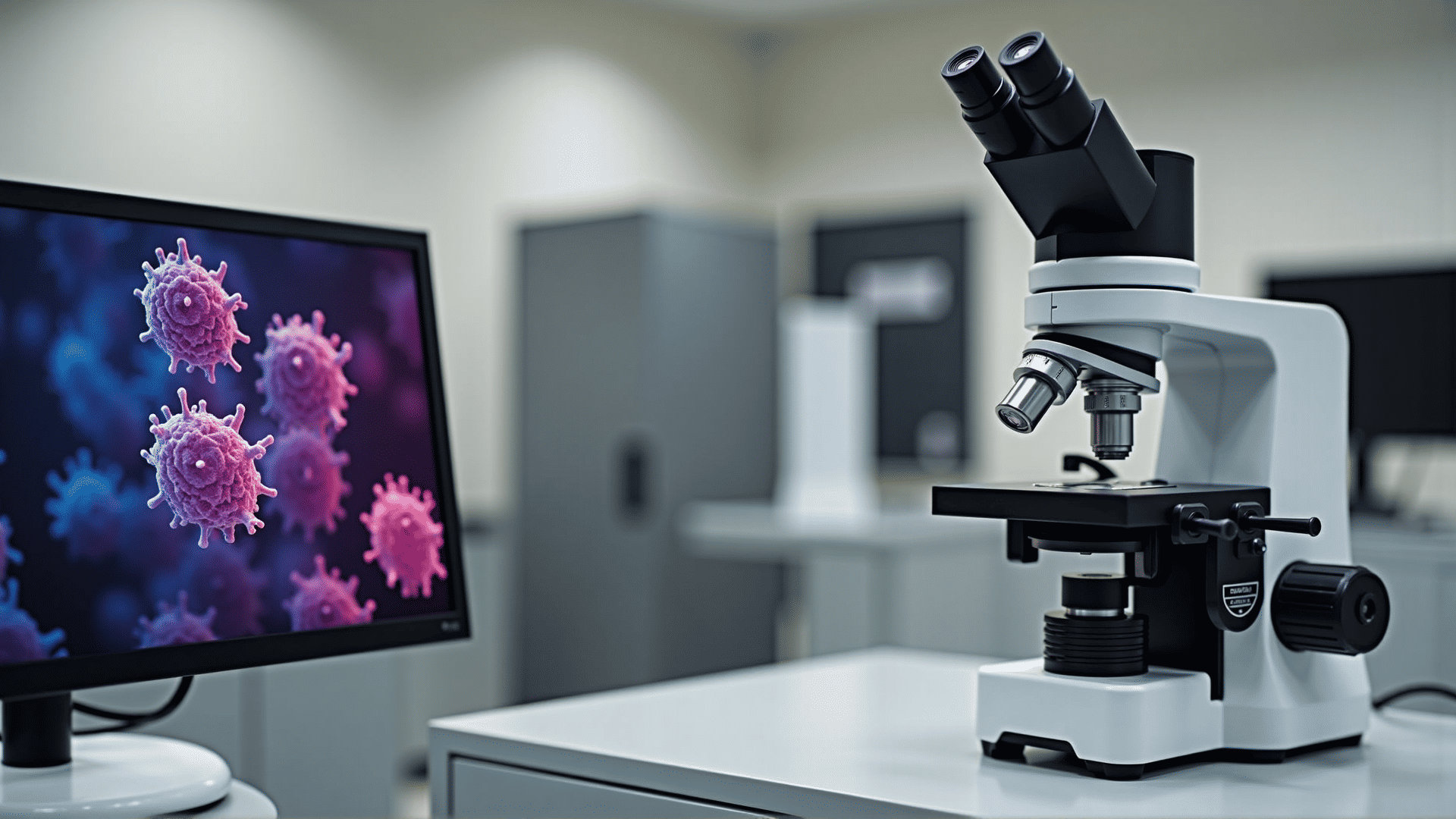
In recent years, the field of microscopy has undergone a renaissance, driven by advances in technology and a relentless quest to peer deeper into the microscopic realms of life. These improvements have unlocked vistas previously unseen, allowing scientists to explore the intricate intricacies of cellular structures with groundbreaking clarity and detail.
At the forefront of these developments is the advent of super-resolution microscopy. Traditional light microscopy has been limited by the diffraction limit, rendering objects smaller than approximately 200 nanometers difficult to distinguish. However, techniques such as Stimulated Emission Depletion (STED) microscopy, Stochastic Optical Reconstruction Microscopy (STORM), and Photoactivated Localization Microscopy (PALM) have circumvented these limitations. Through clever manipulation of light and engineering proteins that fluoresce under specific conditions, these techniques can achieve resolutions down to a few nanometers, revealing details that were once mere smudges in conventional imaging.
These advances have had a transformative impact on our understanding of cellular processes. In neuroscience, super-resolution microscopy has illuminated the dense networks of synapses, offering insights into how neurons communicate. By visualizing the precise architecture of synaptic connections, researchers can better understand the mechanisms underlying learning and memory, as well as disorders such as Alzheimer's disease and schizophrenia.
In the realm of cell biology, next-generation microscopy has shed light on the dynamic behavior of organelles. The use of live-cell imaging allows scientists to observe the choreography of mitochondria, lysosomes, and the endoplasmic reticulum in real time, providing a window into cellular processes like energy production, secretion, and autophagy. This dynamic view of cells in their native environment presents opportunities not only for academic curiosity but also for targeted medical interventions.
Significantly, advancements in electron microscopy have fortified our capacity to visualize the nano-scale world. Cryo-electron microscopy (cryo-EM), which won the Nobel Prize in Chemistry in 2017, has become a powerhouse for structural biology. Cryo-EM facilitates the visualization of biomolecules in their native state, preserved in vitreous ice at cryogenic temperatures, allowing scientists to determine the structures of proteins and complexes that were previously considered technically infeasible. This approach is shedding light on the fundamental workings of life, revealing the proteins involved in processes ranging from immune signaling to DNA replication.
Moreover, the integration of artificial intelligence and machine learning with microscopy is further pushing the boundaries of what can be discovered. Automated image analysis aids in the handling of vast datasets generated by advanced imaging techniques, extracting meaningful patterns and insights from the noise of pixels. Machine learning algorithms are increasingly adept at predicting cellular behaviors, offering clues about how cells might react to certain stimuli or environmental changes.
These technological leaps in microscopy are part of a broader trend toward interdisciplinary collaboration within the sciences. Chemists, physicists, biologists, and computer scientists work together to continue to refine these techniques, broadening their applications and ensuring that these tools remain at the cutting edge of exploratory microscopy.
Ultimately, the insights garnered from these extraordinary tools do not just satiate scientific curiosity; they have practical implications. From the development of novel therapeutics to the design of biomaterials, the knowledge gained from advanced microscopy paves the way for innovations that impact society technologically, medically, and environmentally. The unseen worlds that microscopy reveals are not just static tableaux; they are vibrant, dynamic realms brimming with possibilities and potential to redefine our understanding of life itself.